
Geotropy uses Iceland’s geothermal expertise to reduce food waste in India
Food waste is responsible for about a tenth of total greenhouse gas emissions, making it one of the worst climate offenders. Nopef provided funding for an Icelandic company to study using renewable geothermal energy to power cold storage facilities for fruit in India. With favourable results, Geotropy has opened a subsidiary in India, helping local farmers to reduce food waste, improve incomes and lower carbon emissions.
Geotropy ehf
Iceland
India
August 2024 – 2025
Geothermal energy, sustainable food and cold-storage infrastructure
With support from Nopef, Icelandic company Geotropy studied how geothermal heat could power cold storage in northern India. The promising results led Geotropy to set up a local subsidiary and take the next step towards a pilot that could help farmers cut food losses, earn more and lower emissions from refrigeration.
Vijay Chauhan grew up in an apple-growing region in northern India, where he saw firsthand the struggles of farmers to preserve their crop: the Food and Agriculture Organization suggests about 13% of food is lost in the supply chain, after harvest but before it reaches stores. This is a huge waste of energy and resources and a significant source of carbon emissions. It also directly harms farmers, who suffer most of the economic loss.
Chauhan moved to Iceland where he earned a PhD in Mechanical Engineering at Reykjavik University and later founded the company Geotropy to provide consultancy, project development and R&D in geothermal energy. In particular, he wondered if geothermal energy could help reduce food waste in northern India.
“It is easier to access good geothermal energy where two tectonic plates meet,” Chauhan explains. “In Iceland, the plates pull apart. But in the Himalayas the plates are colliding and hot liquid is forced closer to the surface. If you can find these ‘hot spots’ you can use that energy.”
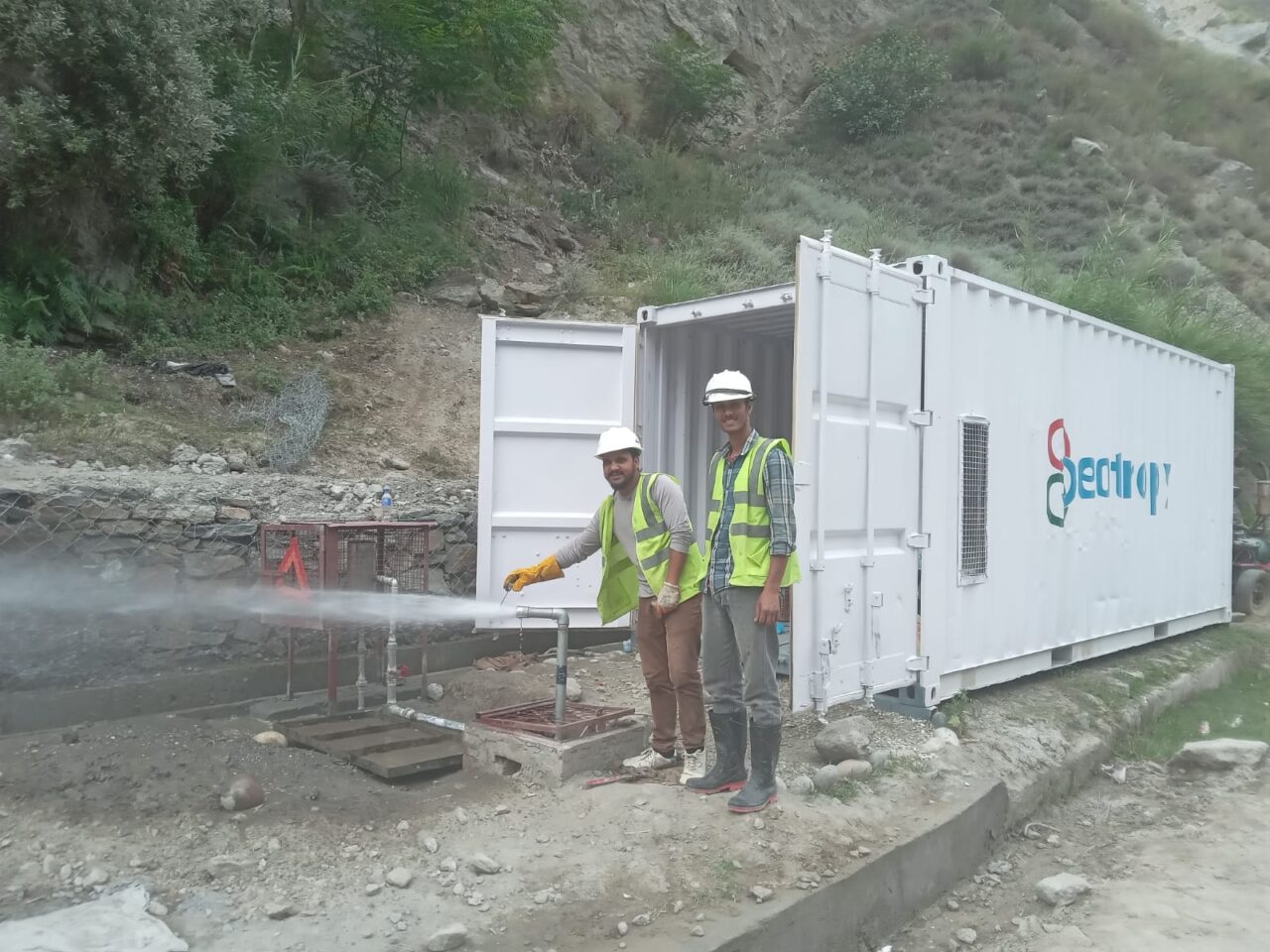
Clean, renewable energy from a tiny hole
Geothermal heat can be used for direct heating or to generate electricity, but Chauhan was more interested in vapor absorption technology which converts heat energy into refrigeration without using electricity. It is highly efficient and has no moving parts, using two fluids in a vacuum to perform evaporative cooling. Heat is used to reset the two coolant fluids to their initial states.
“Geotropy approached Nopef for funding to assess the conditions for establishing a local geothermal-powered cold-storage and food-processing business in India, including technical, economic, regulatory and organisational aspects. A key objective was to enable pilot geothermal projects with the public sector and local stakeholders,” says Victor Degerlund, Investment Manager at Nefco. “We were very interested in the environmental benefits, because there is clearly a lot of potential with geothermal.”
Chauhan agrees. “Geothermal has the smallest footprint out of all renewables,” he says. “Wind and solar farms take up a lot of space. Hydropower needs a huge dam and greatly impacts the biodiversity of an area. With geothermal all you need is a 12–15-centimetre hole in the ground.”
Local geothermal resources provide local benefits
The feasibility study confirmed the financial, technical and logistical viability of operating a local geothermal business in India. Geotropy opened a subsidiary, obtained all the necessary regulatory permissions and signed an agreement with a state-owned company to develop a pilot project. The project also received funding from the Ministry for Foreign Affairs of Iceland and Project InnerSpace, an American-based non-profit promoting the use of geothermal energy.
Previously, the local orchards had to immediately sell their produce to middlemen, who sent the apples to cities where they were stored in refrigerated warehouses. As about 74% of India’s electricity generation comes from coal, these urban warehouses have a high carbon footprint.
“With our solution, these farmers can store their produce locally,” Chauhan says. “Waste is reduced, emissions from cooling are nearly zero, farmers can choose when to sell so they get better prices, and it supports local employment. Geothermal is a local resource and provides local benefits.”
Opportunities for expansion
Geotropy now employes five people, as well as providing jobs for many subcontractors in India. The Himalayas are about 2,500 kilometres long, so there is conceivably a vast geographical area for this solution to expand.
“We are also testing other uses for geothermal,” says Chauhan. “For example, some grades of apples are dried as apple chips. We are experimenting with a geothermal-powered dryer which can process 300-400 kilograms per day.”